
🔋 Battery EPR Waste Management
As the demand for batteries continues to rise—driven by the growth of electric vehicles, consumer electronics, and energy storage systems—managing battery waste has become a critical environmental priority. At ADS Enviro, we offer end-to-end CPCB-approved solutions (#CPCB #CPCBApproved #CPCBBattery) for Battery EPR (Extended Producer Responsibility) compliance, helping producers, importers, and brand owners meet their legal obligations under the Battery Waste Management Rules, 2022. As a trusted alternative to Attero and other recyclers, we provide comprehensive battery waste management services.

🧩 Battery Categories as per CPCB Standards
The CPCB classifies batteries under four major categories for regulatory purposes
1. Portable Batteries
Used in mobile phones, laptops, toys, remote controls, torches, etc.
Includes:
Alkaline, Zinc-Carbon, Button Cells, Lithium-ion (Li-ion), NiMH, NiCd
2. Automotive Batteries
Designed to start or power vehicles
Includes:
Lead-Acid Batteries used in cars, motorcycles, trucks, etc.
3. Industrial Batteries
Used in backup systems, solar storage, telecom, and medical devices
Includes:
Lead-Acid, Lithium-ion, NiCd, NiMH
4. Electric Vehicle (EV) Batteries
High-capacity batteries used in electric vehicles
Includes:
Mostly Lithium-based chemistries (LFP, NMC, LMO)
⚙️ Our Battery EPR Services
As a CPCB-registered battery waste recycler, we help businesses across India meet their EPR compliance obligations with efficiency, transparency, and environmental responsibility.
✔️ Collection & Logistics
- • Pan-India reverse logistics for battery waste
- • Safe transportation as per Hazardous Waste guidelines
✔️ Authorized Recycling
- • Eco-friendly recycling processes for all battery types
- • Recovery of valuable materials: Lead, Lithium, Nickel, Cobalt
✔️ Regulatory Compliance Support
- • Assistance with CPCB/SPCB registration
- • Preparation of Annual Returns and audit documentation
- • Issuance of EPR Certificates to meet obligation targets
✔️ Digital Traceability
- • Real-time tracking and reporting through IT-enabled systems
- • Transparent documentation for all collection and recycling activities
🔄 Batteries We Recycle
We are equipped to handle and recycle all types of batteries, including:
Lead-Acid Batteries
Inverter, Automotive, Industrial - High recycling value and environmental importance.
Lithium-ion Batteries
EVs, Mobile Phones, Laptops, Energy Storage - Modern rechargeable batteries.
Nickel-Based Batteries
NiMH, NiCd - Rechargeable batteries commonly found in power tools and emergency lighting.
Zinc-Carbon & Alkaline
Common household batteries - Single-use batteries from electronic equipment.
Button Cells
Used in watches, medical devices, hearing aids - Specialized battery types.
EV Batteries
High-capacity lithium-based battery packs for electric vehicles.
🔬 Battery Composition
Understanding the chemical composition of batteries is essential for safe recycling, material recovery, and environmental compliance.
🔋 Lead-Acid Batteries
- • Lead (Pb) – 60–70%
- • Sulfuric Acid (H₂SO₄) – Electrolyte
- • Polypropylene (Plastic Casing)
- • Lead Oxide (PbO2) – Active material
🔋 Lithium-ion Batteries (Li-ion)
- • Lithium (Li)
- • Cobalt (Co), Nickel (Ni), Manganese (Mn)
- • Graphite (C) – Anode
- • Aluminum & Copper Foils
- • Organic Electrolytes (LiPF₆)
- • Plastic or Aluminum casings
🔋 Nickel-Cadmium (NiCd)
- • Nickel Hydroxide (Ni(OH)₂)
- • Cadmium (Cd)
- • Potassium Hydroxide (KOH) – Electrolyte
- • Steel casing
🔋 Nickel-Metal Hydride (NiMH)
- • Nickel (Ni)
- • Rare Earth Alloys (Lanthanum, Cerium)
- • Potassium Hydroxide (KOH) – Electrolyte
- • Stainless steel casing
🔋 Zinc-Carbon / Alkaline
- • Zinc (Zn) – Anode
- • Manganese Dioxide (MnO₂) – Cathode
- • Electrolyte: Ammonium Chloride or KOH
- • Steel & Plastic Housing
🔋 Button Cells
- • Silver-Oxide, Zinc-Air, Mercury-Oxide
- • May contain mercury, silver, zinc
- • Composition varies by type
- • Specialized handling required
⚙️ Battery Waste Recycling Process
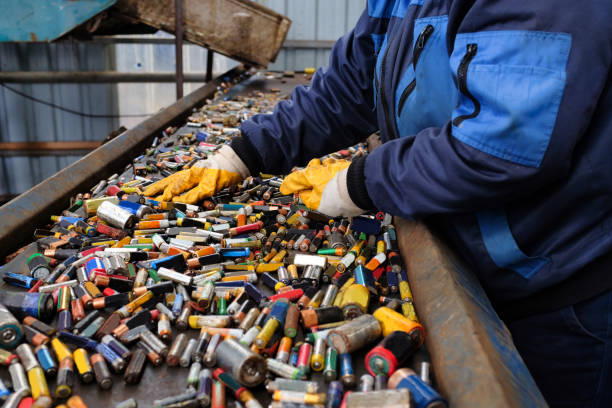
At ADS Enviro, we follow a scientifically designed and environmentally compliant process for battery waste recycling. Our process ensures safe material recovery while minimizing environmental harm.
Collection & Transportation
Collection of used and waste batteries from producers, bulk consumers, and collection centers. Proper labeling, packaging, and storage as per hazardous waste rules. Transportation to authorized recycling facilities using compliant logistics.
Sorting & Pre-Processing
Segregation of batteries by type and chemistry (Lead-Acid, Li-ion, NiMH, etc.). Disassembly of large battery packs (e.g., EV batteries). Removal of external casings, connectors, and electronics.
Material Recovery
Lead-Acid: Smelting process to extract lead and separate plastic components. Li-ion: Mechanical + hydrometallurgical or pyrometallurgical processes. NiCd/NiMH: Separation of nickel and cadmium using high-temperature or chemical treatment.
Refinement & Purification
Extracted metals and materials are refined to high purity for reuse in manufacturing. Neutralization and treatment of any hazardous byproducts.
Residue Management & Documentation
Safe disposal of non-recyclable or toxic waste through authorized hazardous waste handlers. Preparation of recycling certificates, material traceability records, and submission to CPCB/SPCB.
Safe Collection
- • Hazardous material handling protocols
- • Specialized collection containers
- • Transportation safety measures
- • Environmental protection
Discharge & Neutralization
- • Complete energy discharge
- • Chemical neutralization process
- • Hazardous material treatment
- • Safety verification
Material Recovery
- • Lead, lithium, and metal extraction
- • Plastic component separation
- • Electrolyte processing
- • High-purity material production
BATTERY EPR RECYCLING TARGETS
Battery Waste Recycling Targets (Battery Waste Management Rules, 2022) By Weight (Recycling Obligations %)
Existing Companies
| S.No | Year | Battery Waste Recycling Targets |
|---|---|---|
| 1 | 2022-2023 | 35% of batteries placed in market |
| 2 | 2023-2024 | 60% of batteries placed in market |
| 3 | 2024-2025 | 70% of batteries placed in market |
| 4 | 2025-2026 onwards | 90% (Lead Acid) & 70% (Li-ion, EV, portable) |
For Companies which started recently
| S.No | Year | Battery Waste Recycling Targets |
|---|---|---|
| 1 | 2022-2023 | 10% of battery weight based on FY 2020–21 |
| 2 | 2023-2024 | 20% of battery weight based on FY 2021–22 |
| 3 | 2024-2025 onwards | 30% of battery weight based on FY two years back |
🌱 Why Partner With Us?
We specialize in safe and efficient battery waste management, ensuring maximum material recovery while protecting the environment from hazardous substances.

📞 Get in Touch
Looking for a trusted partner to manage your Battery EPR obligations? We're here to help. Get in touch today to ensure full regulatory compliance while contributing to a cleaner and more sustainable future.
Frequently Asked Questions About Battery Waste Recycling
Common questions about battery recycling and battery EPR in India
What is battery EPR?
Battery EPR (Extended Producer Responsibility) requires producers and importers of batteries to ensure collection and environmentally sound recycling of used batteries. This includes lead-acid, lithium-ion, nickel-based, and other battery types. Companies must register on the CPCB portal, meet collection targets, and partner with authorized recyclers like ADS Enviro Group.
How do you recycle lithium-ion batteries?
Lithium-ion battery recycling involves safe discharge, disassembly, material recovery (lithium, cobalt, nickel, manganese), and proper handling of hazardous components. ADS Enviro Group uses advanced recycling technologies to recover valuable metals while ensuring environmental safety and compliance with battery waste management rules.
Can you recycle EV batteries?
Yes, ADS Enviro Group provides EV battery recycling services for electric vehicle batteries. We handle high-capacity lithium-ion battery packs, ensuring safe disassembly, material recovery, and proper disposal of hazardous components. EV battery recycling helps recover valuable metals and supports the circular economy.
What types of batteries do you accept?
We accept all types of batteries including lead-acid batteries (inverter, automotive, industrial), lithium-ion batteries (mobile phones, laptops, EVs, energy storage), nickel-based batteries (NiMH, NiCd), zinc-carbon and alkaline batteries, and button cells. We handle both consumer and industrial batteries.
Is battery recycling safe?
Yes, when handled by authorized recyclers like ADS Enviro Group, battery recycling is safe. We follow CPCB-approved processes, use proper safety equipment, handle hazardous materials correctly, and ensure environmental compliance. Our facilities are authorized and regularly audited for safety and environmental standards.
Related Services
Explore our comprehensive waste management and recycling solutions
EPR Compliance Services
Complete battery EPR registration, filing, and compliance support for producers and importers.
Explore Battery EPR ServicesE-Waste Management
Complete e-waste recycling with secure data destruction and EPR compliance services.
Discover E-Waste SolutionsPlastic Waste Recycling
Complete plastic recycling services with PCR granules supply and plastic EPR compliance.
View Plastic Recycling